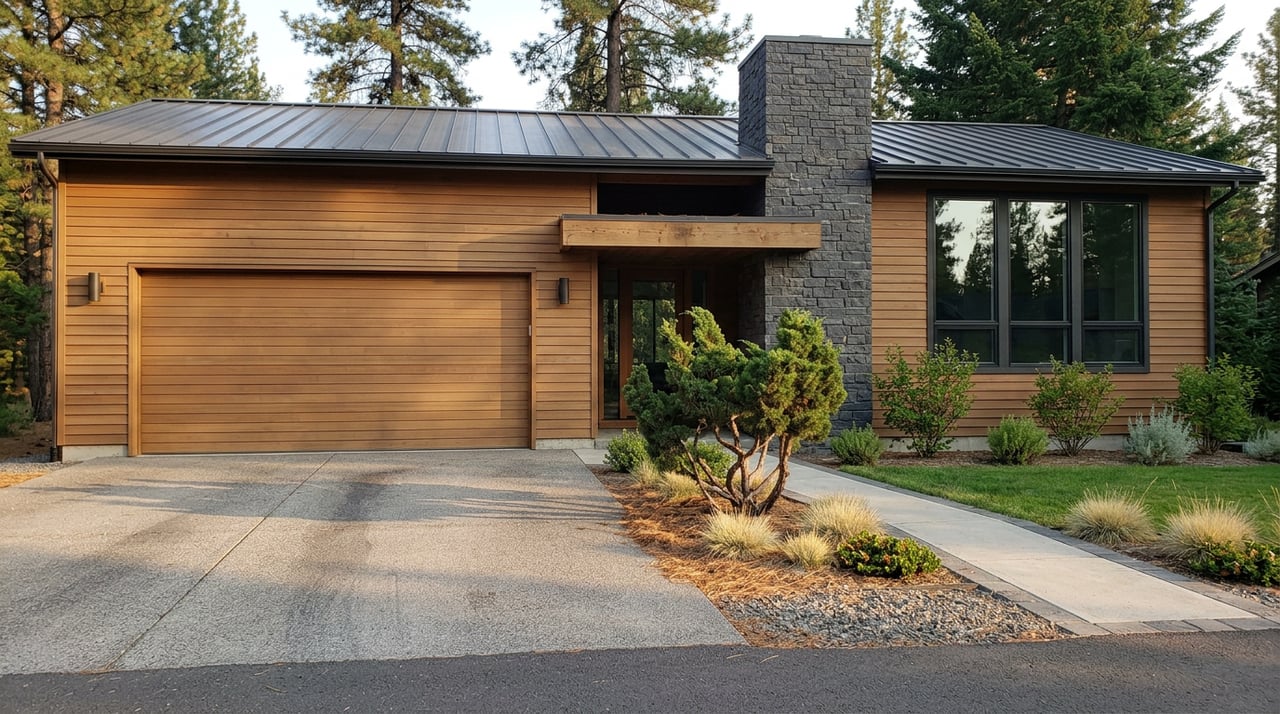
An investor who has spent a few months on Bend's Short-Term Rental Eligibility Map eventually finds Sunriver and feels the tension release. According to Hello Bend Oregon, no land use permit or operating license is required. Compared to Bend's frozen, permit-by-permit system, Sunriver follows a different approach.
Then the closing paperwork mentions a program called Recreation Plus, priced by the bedroom, and the cost picture becomes more complicated.
Bend and Sunriver have different short-term rental cost structures. Bend uses a government permit that is scarce and mostly frozen. Sunriver has no equivalent permit requirement. Instead, the Sunriver Owners Association charges recreation fees that vary by bedroom count. Understanding which mechanism you are underwriting against is the difference between a spreadsheet that holds up and one that doesn't.
Bend and Sunriver Use Different STR Cost Structures
Inside Bend city limits, the Bend Development Code says any short-term rental application filed after April 15, 2015 does not run with the land. Sell the house, and the permit terminates. The new owner has to reapply for a Land Use Permit, subject to the City of Bend's 500-foot separation rule that keeps whole-house rentals from clustering, and there is no guarantee the application will be approved. According to Basecamp Vacation Rentals, roughly 450 permits issued before that 2015 cutoff are still transferable, and those properties tend to carry a resale premium precisely because they skip the requeue. Everyone else pays a $2,126.80 land use application fee, then, as Central Oregon Investor Network reports, $280 for an initial operating license and $205 a year to keep it, on top of the City of Bend's 10.4% room tax.
Step outside city limits into unincorporated Deschutes County, where Sunriver sits, and none of that land use machinery applies. There is no operating license to renew and no separation rule to fail. That single fact is why Sunriver shows up in almost every STR-investor comparison as the flexible alternative to Bend.
Sunriver's recreation fees are another part of the comparison. Sunriver Owners Association general manager James Lewis has estimated that 35 to 40% of Sunriver's roughly 4,200 properties already operate as short-term rentals, a scale that makes SROA's recreation fees relevant to an STR cost comparison.
Here is the side-by-side, using SROA's published 2026 figures and Bend's current fee schedule:
| Cost Item | City of Bend | Sunriver (unincorporated Deschutes County) |
|---|---|---|
| County or city permit required | Yes, Land Use Permit plus Operating License | No county land use permit or operating license |
| Permit transferability | Non-transferable if issued after April 15, 2015; roughly 450 legacy permits from before that date remain transferable | Not applicable |
| Upfront cost to add a new whole-house rental | $2,126.80 land use application plus $280 initial operating license | Not applicable |
| Annual renewal | $205 operating license | SROA Recreation Plus Program: $1,380 for a 1-bedroom up to $6,210 for an 8-bedroom home, 2026 rates |
| Base HOA or association fee | Not applicable | $172.94 per month, 2026 SROA maintenance fee |
| Guest-facing tax load | 10.4% city room tax plus 1.5% state tax | 8% Deschutes County transient room tax plus 1.5% state tax, as Cascadia Getaways reports |
| Coming in 2027 | Not applicable | $35 per month mandatory fiber fee on every developed property, starting January 2027 |
Recreation Plus Fees Vary by Bedroom Count
Bend's system includes an entry permit. After that, the ongoing license cost is flat: $205 a year whether the house has two bedrooms or six. Sunriver has no entry gate, while Recreation Plus is priced per bedroom rather than per property.
Recreation Plus is what lets a renter use SHARC's aquatics center, disc golf, tennis and pickleball courts, and the boat launch. It is a separate credential from the Member Preference Program, which is the $90 card owners buy for their own personal recreation access and does not cover guests. If your Sunriver purchase is a rental, Recreation Plus is the line item that keeps your listing competitive with every other Sunriver property advertising pool and river access, and for 2026 it runs from $1,380 for a one-bedroom home to $6,210 for an eight-bedroom home.
That is worth sitting with for a second. The bedroom count that lets you charge a higher nightly rate and sleep more guests is the same number that sets your fixed annual recreation cost. A five or six-bedroom home built for groups, the kind of property many STR buyers specifically target in a resort market, sits well into the upper half of that fee range before the base $172.94 monthly maintenance fee is even added. Layer those two together and a larger Sunriver rental is carrying a meaningfully higher fixed cost floor than a comparably sized Bend rental with its flat $205 renewal.
Additional SROA Costs to Consider
SROA has an upcoming fiber fee and a proposed Capital Transfer Fee to consider.
Every developed Sunriver property will be billed $35 a month for fiber internet starting in January 2027, whether the owner uses the service or not. This isn't optional and it isn't rental-specific. It applies across the board, and it lands right as the existing coax network is scheduled for decommissioning at the end of 2026, so there is no opt-out path once it takes effect.
Separately, SROA has been weighing a Capital Transfer Fee equal to 0.5% of the sale price. As of spring 2026, it remained a proposal rather than a standing charge. Given that HOA ballot measures can pass, fail, or get revised in the months between a spring proposal and a closing today, this is a fact worth confirming directly with SROA or your title company before you sign, not something to assume either way from a search result.
A Difference in Guest Taxes
One difference in the comparison favors Sunriver. Guests staying in a Sunriver rental pay Deschutes County's 8% transient room tax plus the state's 1.5% transient lodging tax, for a combined 9.5%. Guests staying in a Bend rental pay the city's 10.4% plus the same 1.5% state tax, for 11.9%. That's a real 2.4 percentage point gap on gross rental revenue, and unlike the fee comparisons above, it favors Sunriver outright, with no bedroom-count asterisk attached.
What This Means Before You Write an Offer
None of this makes Sunriver a worse buy than Bend, or the reverse. It means the two markets have different STR requirements and costs, and a spreadsheet built for one won't hold up in the other. Before running numbers on a Sunriver property you're planning to rent, get the current Recreation Plus tier for the specific bedroom count you're considering, not a townwide average. Ask what the SROA fee statement shows beyond the base $172.94, including any SHARC assessment, and account for the $35 monthly fiber fee scheduled to start in January 2027. And confirm the Capital Transfer Fee's current status directly, since a proposal from earlier this year may or may not be in effect by the time you close.
If you're weighing a Sunriver purchase against a Bend one and want the actual fee schedule pulled for the bedroom count and property type you're targeting, The Agency Bend can walk through both sides of that math before you write an offer. Request a Premium Market Consultation and we'll bring the numbers that actually apply to your deal, not the townwide averages.
Frequently Asked Questions
Do I need a county permit to run a short-term rental in Sunriver? No. Unincorporated Deschutes County, where Sunriver sits, does not require a land use permit or an operating license for short-term rentals the way the City of Bend does.
Is the Recreation Plus Program the same as the Member Preference Program? No. Member Preference is the $90 annual card that covers an owner's personal recreation access. Recreation Plus is the separate program that covers renters and guests, and it's the one priced on a sliding scale by bedroom count, from $1,380 to $6,210 for 2026.
Is the Capital Transfer Fee currently being charged on Sunriver sales? As of spring 2026, it was a proposed ballot measure equal to 0.5% of sale price rather than a standing charge. Confirm the current status with SROA or your title company before closing, since a proposal can move in the months between a spring vote and a purchase later in the year.
This article is general information, not legal, tax or financial advice. Consult a qualified professional about your situation.